
Today, humanoid robots are accelerating their transition from prototypes to mass production. Data centers, driven by the rising density of computing power, are continuously increasing the demand for the synergy of efficient power supply and liquid cooling. Meanwhile, integrated photovoltaic, energy storage, and charging power stations are gradually becoming the standard for new energy infrastructure. These scenarios impose higher requirements on real-time control accuracy, power conversion efficiency, thermal management capabilities, and functional safety levels, driving high-end MCUs (Microcontroller Units), real-time control DSPs, and high-precision sensing chips into a volume shipment cycle.
In the past, core components such as high-end MCUs, real-time control DSPs, and high-precision encoder chips were long dominated by manufacturers in Europe, the US, and Japan. In recent years, driven by the overlapping demands of the "15th Five-Year Plan" for high-end intelligent manufacturing, embodied intelligence, low-altitude economy, and NEVs (New Energy Vehicles), domestic chip companies are shifting from "single-point substitution" to "full-chain solution output." According to industry statistics, the global MCU and real-time control chip market in 2024 remains dominated by international manufacturers such as Renesas, Texas Instruments (TI), and Infineon. However, Chinese manufacturers have introduced mass-producible benchmark products in dimensions such as Armv7-M/Armv8-M architectures, Helium edge AI acceleration, and functional safety certifications. Among them, relying on over 20 years of accumulation in chip design and embedded system development, Zhuhai Geehy Semiconductor has built a full-stack matrix of "main control + drive + sensing" — ranging from the APM32 high-performance MCU, G32R501 real-time control MCU/DSP, and G32R430 encoder-dedicated MCU, to motor control SoCs (System on Chip), car light driver ICs (Integrated Circuit), and ultrasonic sensors. It has scaled its entry into tracks such as high-end intelligent manufacturing, low-altitude economy, energy technology, embodied intelligence, and NEVs.
Recently, "Xinyao Interview" had a dialogue with Liu Yang, Director of the Industrial Control Chip Business Unit at Geehy Semiconductor. Focusing on topics such as the product matrix, layout in embodied intelligence, adaptation to AI (Artificial Intelligence) computing power infrastructure, highly integrated solutions for servo motors, commercialization of integrated photovoltaic, energy storage, and charging systems, and domestic substitution adaptation across the entire industry chain, the interview systematically reviewed the industrial layout of this domestic high-end control chip manufacturer.
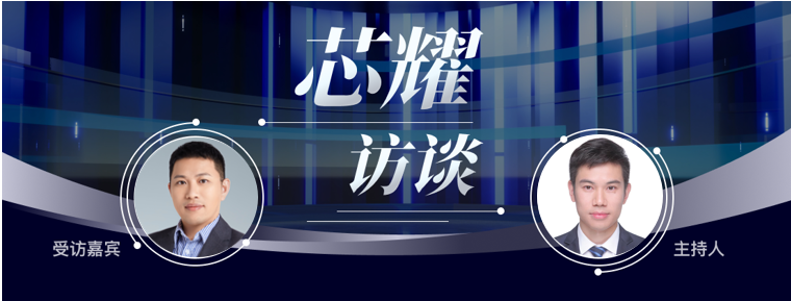
Figure | Left: Liu Yang, Director of the Industrial Control Chip Business Unit at Geehy Semiconductor; Right: Shi Dezhi, Senior Industry Analyst at eefocus
The following is the transcript of the interview:
1. Could you please give an overall introduction to Geehy Semiconductor's product matrix, as well as the core business directions focused on this year?
Geehy Semiconductor possesses a full-stack product matrix of "main control + drive + sensing," focusing on product lines such as industrial/automotive-grade MCUs, real-time control DSPs, motor-dedicated chips, car light driver ICs, and ultrasonic sensors. This year, Geehy is focusing on the key areas of the national "15th Five-Year Plan," committed to providing high-performance, highly integrated, and highly reliable domestic chips and solutions for tracks such as high-end intelligent manufacturing, low-altitude economy, energy technology, embodied intelligence, and NEVs.
2. Embodied intelligence, represented by humanoid robots, has become a core track for new quality productive forces. Has your company made any layout in this field?
Geehy's chip products can fully adapt to core robotic application scenarios such as "perception-decision-execution." For example, the APM32F4/F1 industrial-grade MCU, G32R501 real-time control MCU/DSP, motor control SoC, and the industry's first encoder-dedicated MCU — G32R430. This product is equipped with a Cortex-M52 core, built-in 16-bit high-precision ADC, and integrated ATAN electrical angle calculation extension instructions, specifically designed for high-precision motion control and position feedback.
3. Given the continuous explosion in hardware demand for computing power infrastructure such as AI data centers and liquid-cooled computing equipment, what adaptive chip products and supporting solutions does your company have?
Geehy's industrial-grade MCUs have been widely mass-produced in core systems of AI data centers, such as power supply, liquid cooling, and cabinet infrastructure. For example, for AI server power supply applications, Geehy's G32R501 real-time control MCU/DSP can complete the two-stage topology control of front and rear PFC+LLC with a single chip; the G32M3101 motor control SoC adapts to the intelligent speed regulation and temperature-controlled cooling needs of AI server cooling fans; for UPS power applications, the APM32E103 mainstream MCU can be used to accurately detect power conditions and record fault information in real time.
4. Domestic high-end industrial chips have long faced the industry status quo of overseas monopoly and high technical barriers. In terms of breaking import dependence and achieving domestic substitution, what benchmark products of your company have achieved stable mass production and large-scale commercialization?
Geehy's three major series of industrial-grade MCUs can meet the demands of high-end applications for computing power, real-time performance, stability, and safety:
1. APM32F4 high-performance MCU, equipped with a Cortex-M4F core, with a clock frequency covering 120MHz-240MHz, supporting FPU and DSP instructions, featuring excellent computing and processing performance and large-capacity storage space;
2. G32R501 real-time control MCU/DSP, equipped with a Cortex-M52 dual-core, with a clock frequency up to 250MHz, supporting the HeliumTM edge AI acceleration unit, featuring efficient computing, real-time control, and sensitive sensing, and has passed the IEC 61508 functional safety product certification;
3. G32R430 encoder-dedicated MCU, equipped with a Cortex-M52 core, with a clock frequency of 128MHz, integrating self-developed ATAN instructions, and equipped with a 16-bit high-precision ADC, which helps enhance the real-time performance of position feedback in servo systems and improve encoder accuracy.
Currently, the three major series of products have been mass-produced and are widely used in products such as PLCs, variable frequency drives, servo controls, encoders, inverters, and charging piles of leading industrial and energy enterprises.
5. In the fields of industrial servo and motor drive, discrete chip solutions are mostly adopted, which have cumbersome architectures and weak adaptability. Your company focuses on highly integrated full-stack solutions. What competitive advantages do you have?
Compared with the traditional discrete chip solutions in the industry, Geehy's full-stack motor chip matrix of "MCU + drive + power" highly integrates control, drive, and protection functions, greatly simplifying customers' hardware circuit design and reducing the BOM cost and development cycle of the whole machine. At the same time, the solution features a high degree of integration, strong compatibility, and outstanding anti-interference performance, which can effectively solve the pain points of discrete solutions, such as complex wiring, difficult debugging, and poor stability.
6. The integrated photovoltaic, energy storage, and charging system is a core terminal scenario for smart energy. Does your company have any landed and reusable commercial cases in this field?
Facing the smart energy field, Geehy Semiconductor has a rich product portfolio and mature reference designs. For example, Geehy's 800W micro-inverter solution, based on the G32R501 single-chip architecture, supports two-way photovoltaic input and independent MPPT control, with a maximum conversion efficiency of 94% and a power factor ≥0.99. The G32R501T domestic power master control MCU, jointly developed with TELD, as the world's first full-chain AI charging module, can support AI self-learning and maintenance-free operation, with a comprehensive efficiency of 96.8% and level-one energy efficiency under all working conditions.
7. Under the general trend of domestic substitution across the entire industry chain, what targeted optimizations and technical adaptations has your company made in terms of chip design and supply chain?
Geehy optimizes the architecture at the chip design end, adapts to local processes, and improves chip yield and reliability. At the same time, it continuously promotes the IP-based development of algorithms and functional modularization. Relying on long-term and stable cooperation with leading upstream and downstream supply chains, the supply is sufficient and controllable. Facing the customization of technical solutions for industry and energy, it ensures stable product delivery and deeply meets the domestic industry's needs for independent and controllable development.
8. Today, industrial competition has shifted from single-product competition to ecosystem competition. How does your company improve the construction of the ecosystem to enhance its comprehensive competitiveness?
Geehy can provide an integrated comprehensive solution of chip hardware, software algorithms, and safety certification, supported by complete reference designs and system development support, to build a full-chain industrial ecosystem. Upstream, it collaborates with domestic process and IP supply chains; midstream, it creates standardized landing chip solutions; downstream, it collaborates with solution providers, terminal enterprises, and research institutes for joint development. By continuously improving the construction of the ecosystem, it steadily enhances its comprehensive market competitiveness.