
On July 9, the "Compact Lens, Infinite Vision": 2026 Quectel XR Solutions and Ecosystem Strategy Launch Conference was held in Shenzhen. At the event, Quectel officially released the Hawk series of fully self-developed AI+AR glasses across the entire value chain, along with the supporting Dolphin series of computing units, marking the IoT (Internet of Things) leader's comprehensive entry into the XR market.
Three Years of R&D: The Strategic Leap from "Smart Connectivity" to "Vision" At the event, Zhang Dong, Co-founder and Chief Operating Officer of Quectel, outlined the three eras of IoT development and elaborated on Quectel's strategic leap from "Smart Connectivity" to "Vision".
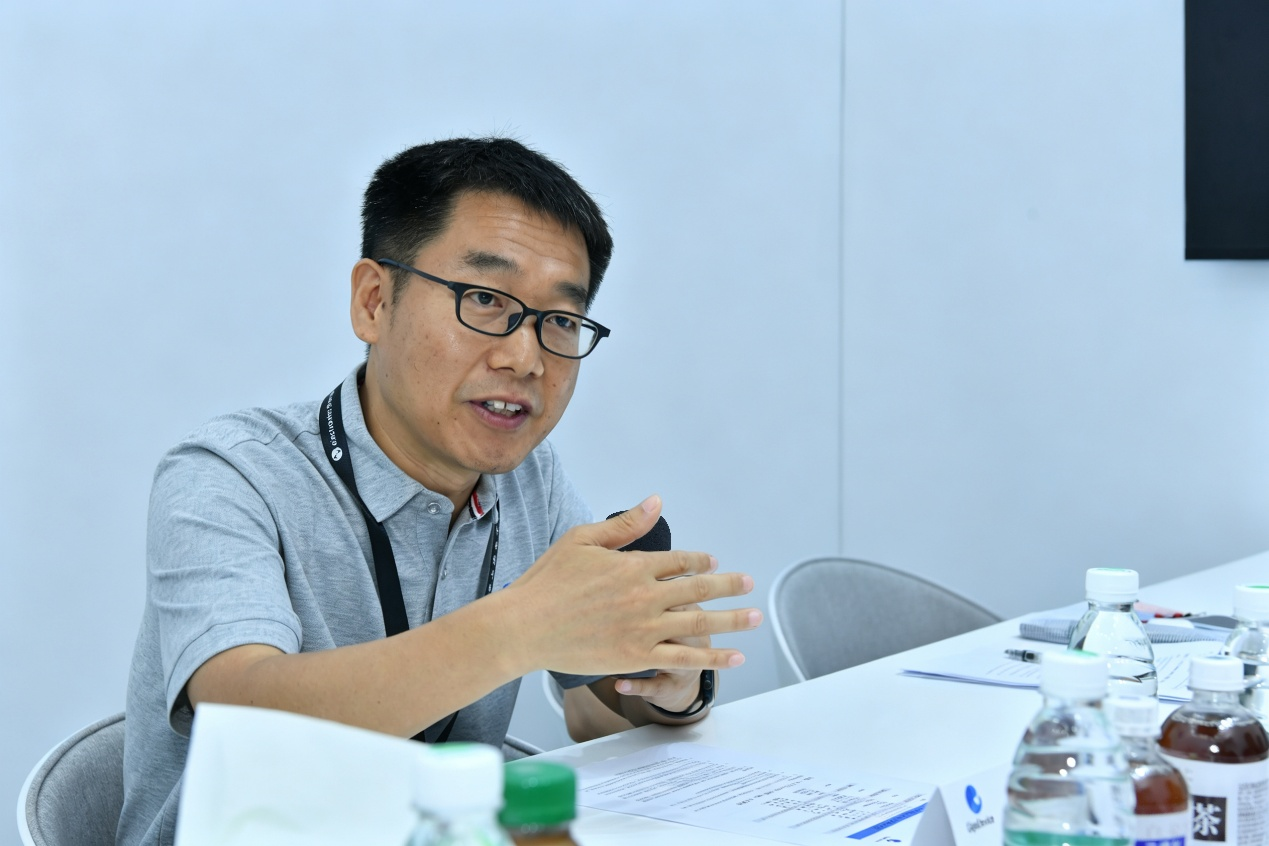
Zhang Dong, Co-founder and Chief Operating Officer of Quectel In 2010, the Internet of Everything was in its infancy, and the core industry proposition lay in "connectivity" itself. Quectel helped various devices stay continuously online with stable and reliable connectivity capabilities, completing the strategic foundation for the 1.0 era. Starting in 2015, the market shifted from basic connectivity to higher demands for experience, interaction, and instant response. Quectel adapted to the trend and established "Smart Response" as the keyword for the 2.0 era. Today, as the three technological waves of AI (Artificial Intelligence), robotics, and XR converge, Quectel has officially entered the 3.0 era—moving from response to decision-making. Zhang Dong stated, "Quectel has already embedded AI decision-making capabilities into a wide range of robots. As for XR, we firmly believe that the core entry point for the next generation of human-computer interaction will be our eyes." In his view, the underlying logic of XR is the deep integration of connectivity, computing power, and AI, and these three capabilities are exactly the profound confidence Quectel has accumulated over the past fifteen years in the fields of communication and intelligence.
3D Capability Framework: End-to-End Support for XR Products from Definition to Mass Production Ma Guowen, General Manager of Quectel's XR Product Line, then reviewed the three-year technical accumulation of Quectel's XR team.
Ma Guowen, General Manager of Quectel's XR Product Line Ma Guowen frankly stated that over the past decade, Quectel has witnessed the complete cycle of the XR industry from capital frenzy to value regression. Quectel's choice to continue investing is based on a prudent judgment of technology trends, and the company's diversified product and technology matrix is precisely the cornerstone of XR development. As AI and Agents accelerate their integration, the next generation of human-computer interaction is being redefined, and XR glasses, as the best carrier and entry point for AI capabilities in wearable devices, will be the first to realize commercial value.
Over the past three years, Quectel has chosen not to take shortcuts. Ma Guowen introduced, "We focus on two priorities: building up capabilities and cutting down barriers. We reduce customers’ heavy R&D burdens, lower XR manufacturing entry barriers, and shorten the commercialization timeline for XR terminals."
Faced with strict new requirements from consumers and vertical industries — high product quality, fast time-to-market and robust supply chains — Quectel proposed the "0-1, 1-N, 1+N" 3D capability framework, focusing on XR hardware and software reference design and definition, solving precision manufacturing and delivery speed at the scale stage, and providing whole industry chain ecosystem integration services.
At the launch event, Ma Guowen showed the attendees a live-action video of Quectel's XR production line at the Changzhou Intelligent Manufacturing Center, demonstrating Quectel's capability reserves in the field of AR glasses manufacturing. The factory is equipped with complete XR assembly production lines and a Class 100 cleanroom, capable of supporting the mass production of various XR devices. "By cooperating with Quectel and relying on complete manufacturing resources, customers can devote 100% of their energy to product definition and market expansion," Ma Guowen stated. He noted that Quectel is currently working closely with chip manufacturers such as Qualcomm Technologies, Axera, and Wuqi Micro, voice technology partners like SoundAI, and multiple hardware supply chain partners. Quectel is not only an integrator of the supply chain but also a full-process enabler for XR products from definition to mass production.
Hawk and Dolphin Series Debut: Diversified Entry into the XR Hardware Market This time, Quectel officially released multiple core AI+XR reference designs, covering different chip platforms, optical solutions, and computing power requirements.
Among them, the Hawk series of AI+AR glasses includes optical waveguide and BirdBath glasses, which can be applied to different vertical industry scenarios. The optical waveguide reference design innovatively supports three levels of electrochromic dimming, and the lenses can automatically adjust light transmittance according to ambient light, effectively solving the pain point of obvious display effect differences when switching between indoor and outdoor environments for AR glasses. This optical waveguide glasses reference design adopts an integrated lightweight design and offers two architecture options: "Qualcomm First Generation Snapdragon AR1 Platform + Wuqi Micro WQ7036" and "Axera ARS45 + Wuqi Micro WQ7036". Customers can flexibly choose according to scenario and cost requirements.
In terms of functions, it supports AI voice assistants, real-time language translation, photo and video capture, and AI audio capabilities, covering the consumer market and vertical industries such as cultural tourism exhibitions, industrial quality inspection, remote collaboration, and healthcare.
The self-developed split full-color BirdBath AR glasses reference design emphasizes an immersive visual experience, with an FOV of 50±1°, brightness up to 5000 nits, and a single-eye resolution of Full HD (1920×1080). It supports a 60 to 120 fps refresh rate and is also equipped with 3-level electrochromic dimming and 0 to 400 diopter adjustment functions, delivering excellent usability for nearsighted users. The peripherals include 2 DMICs, dual stereo speakers, and a wearing detection sensor, paired with a 12-megapixel wide-angle camera, allowing users to enjoy a high-definition large-screen experience even after taking off their myopia glasses.
The Dolphin series of AI+AR computing units, named for dolphins’ intelligence and agility, deliver robust computing performance and flexible scalability.
This series is based on the two major platforms of Qualcomm Dragonfly™ Q-6690 and QCS8550, and is divided into a 5G edge-cloud convergence version and an edge computing version. Among them, the 5G edge-cloud convergence variant features a built-in, Quectel self-developed eSIM, supports operator certifications in over 150 countries and regions, and is equipped with a self-developed eIM management platform; the edge computing variant delivers 48 TOPS to support the edge deployment of AI Agents.
The computing unit can not only connect to AR glasses to provide rich OS resources and AI interaction capabilities (Agent-centric intent control and command interaction), but also connect to more types of terminals such as 3D headsets and displays over wired or wireless links, greatly expanding application scenarios and becoming an intelligent assistant in work and life.
Industry Partners Gather to Build the XR Ecosystem At the launch event, many core industry partners of Quectel also brought in-depth sharing. Zhu Xiaodong, Senior Vice President of Qualcomm Technologies, stated, "Personal AI and spatial computing are becoming important directions for terminal innovation in the era of Agentic AI. Future smart terminals not only need stronger understanding, perception, and collaboration capabilities, but also need to integrate more naturally into users' daily lives. XR terminals such as smart glasses are expected to become important carriers for Agentic AI, bringing new growth space to industry development. Qualcomm Technologies will continue to promote innovations in spatial computing, on-device AI, and connectivity technologies, and work with industry partners to promote ecosystem development."
Zhu Xiaodong, Senior Vice President of Qualcomm Technologies Yan Yongjie, R&D Director of SoundAI, pointed out that AI glasses face multiple challenges in practical applications, including complex noise, echo interference, limited small-array far-field sound pickup, and low-power constraints. Addressing these pain points, SoundAI launched an AI glasses intelligent voice solution based on "DNN + Computational Auditory Scene Analysis" technology, which can achieve core capabilities such as AI call noise reduction with voice zone isolation, directional sound pickup for face-to-face translation, and ultra-low power KWS voice wake-up. The AI+XR voice solution jointly created by Quectel and SoundAI adopts a modular design, which can combine AEC, noise reduction, directional sound pickup, and other algorithm capabilities according to different application scenarios, and supports multi-chip platform deployment and tuning. Currently, this solution has been applied to Quectel's self-developed integrated optical waveguide lightweight AI+AR glasses reference design.
Yan Yongjie, R&D Director of SoundAI Shen Bo, Co-founder and CTO of Axera, analyzed the four key challenges facing the AI glasses sector: display quality bottlenecks, battery limitations, insufficient computing power and poor wear comfort. He pointed out that there is a fundamental contradiction between high-resolution display and low-power requirements, and the ARS45 chip was born to solve these pain points. The chip adopts a 12nm process, integrates a 4-core A53 processor and a 1GHz vision DSP, and has an equivalent NPU computing power of 6 TOPS. In terms of imaging, it supports 7-channel video input, binocular 1080p@120Hz display, and 16-megapixel HDR photography, while the overall power consumption is reduced by 50% compared to the previous generation.
Shen Bo, Co-founder and CTO of Axera Huang Pan, CEO of Chuangshiyun Technology, shared the product concept of lightweight AI glasses from the perspective of terminal brands. He emphasized that AI glasses need to find a balance between weight, battery life, appearance, and interactive experience. The reference design and engineering capability support provided by Quectel allow brand owners to focus their energy on user-level experience polishing and market expansion.
Huang Pan, CEO of Chuangshiyun Technology Lin Hao, Co-founder and CTO of Wuqi Micro, shared the results of Wuqi Micro's diversified AI glasses solutions empowering the new XR ecosystem. Based on its self-developed wireless communication and AI multi-modal heterogeneous computing capabilities, Wuqi Micro has formed a strong alliance with Quectel's engineering foundation to jointly create cost-effective solutions, covering more price ranges and application scenarios, and providing flexible choices for the diversified landing of AI glasses.
Lin Hao, Co-founder and CTO of Wuqi Micro The XR industry is moving from proof of concept to large-scale commercial use. Quectel will continue to exert efforts in technology, intelligent manufacturing, and ecosystem, helping global XR customers accelerate product landing and jointly explore the infinite possibilities of the next generation of human-computer interaction hidden within the compact lenses.